How Moana maintains continuity of care when connectivity is unreliable
Moana is sometimes described as an offline system. It is more accurately described as designed for unreliable connectivity, and the distinction has consequences for patient safety, data integrity and reporting.
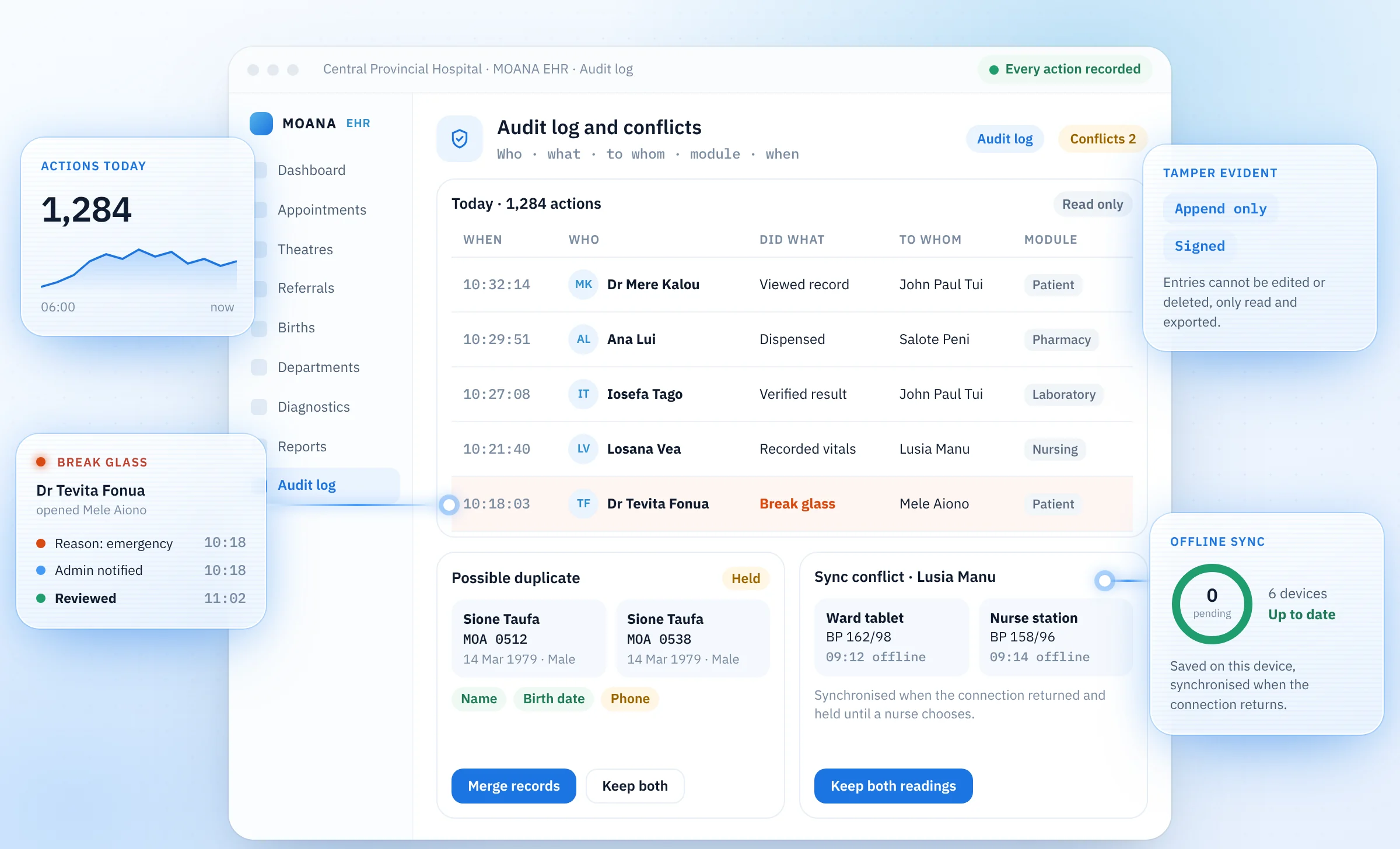
Moana is designed for connections that are intermittent. If the connection drops during a ward round, the nurse continues to record vitals and medication doses. Each entry is saved on the device and added to a synchronisation queue.
When the connection returns, the queue synchronises in order and the update becomes available to the rest of the hospital.
Why Moana is not an offline system
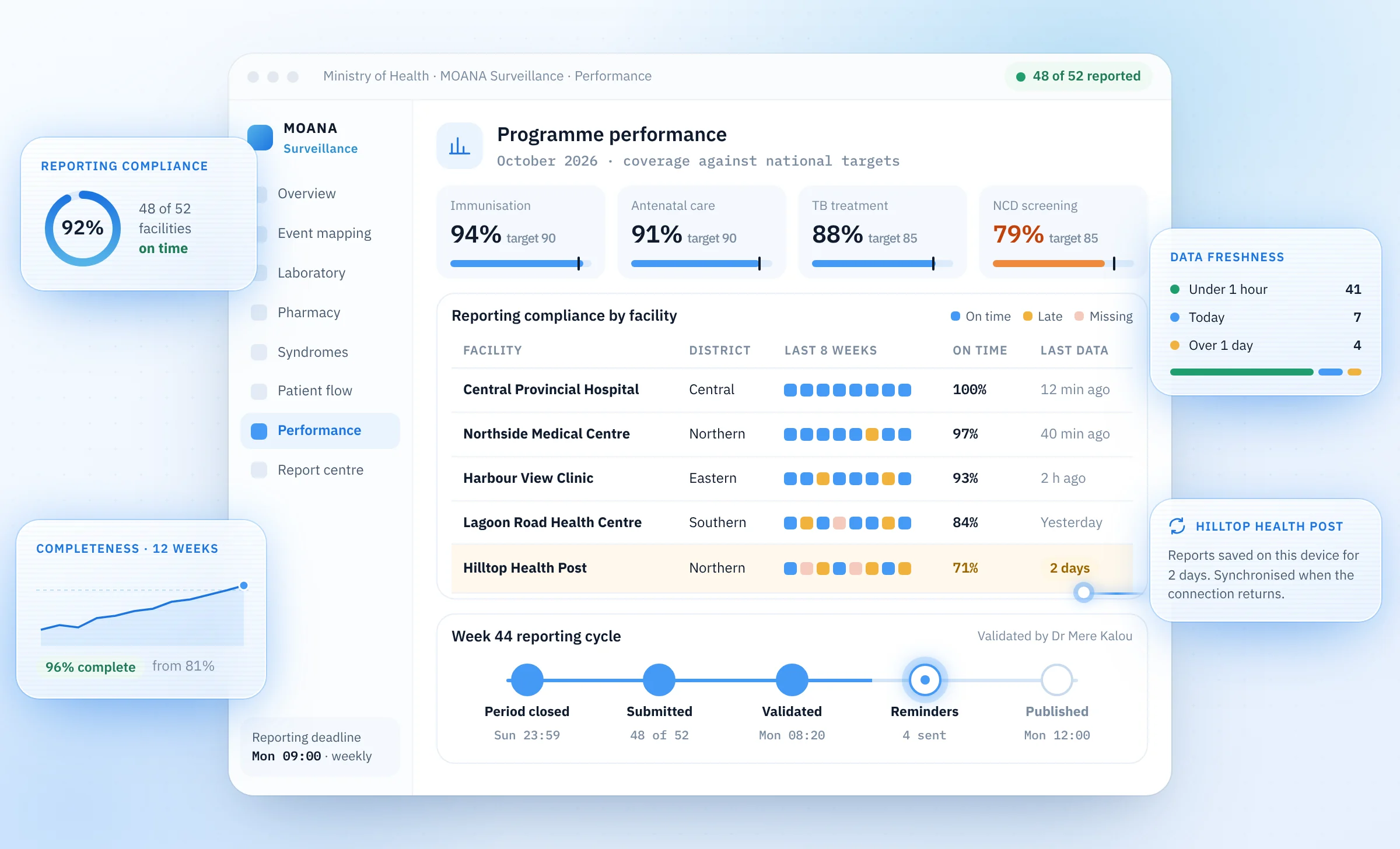
A health system is a network. Laboratory results must reach the clinician who ordered them. A referral must reach the receiving hospital. A ministry of health needs facility data to detect an outbreak. None of these functions can be performed on a device that never connects.
The design objective is therefore that a dropped connection does not interrupt care or lose recorded data, while the exchange of information continues to depend on connectivity.
How data integrity is maintained
- Every change is stored on the device first, then queued for synchronisation.
- Deleted records are tracked, so that an earlier copy cannot be restored when a device reconnects.
- When two users change the same record while disconnected, the conflict is held for review rather than silently overwritten.
- Some actions are never queued. Passwords and governance changes, for example, are processed only when online.
Performance on reliable networks
The same platform runs where networks are fast and stable, without any change to how clinicians work. The resilience matters most in the many health systems where connectivity is unreliable on a daily basis.